What One Early Learning Centre Achieved Through an Early Learning Partnership
Early childhood educators are being asked to support increasingly complex regulation, sensory and behavioural needs within busy learning environments. While professional development can build knowledge, translating that knowledge into everyday practice is often the greatest challenge.
At Queensland Premium Allied Health (QPAH), we believe meaningful change occurs when educators are supported not only through training, but through coaching, mentoring and reflective practice embedded within real learning environments.
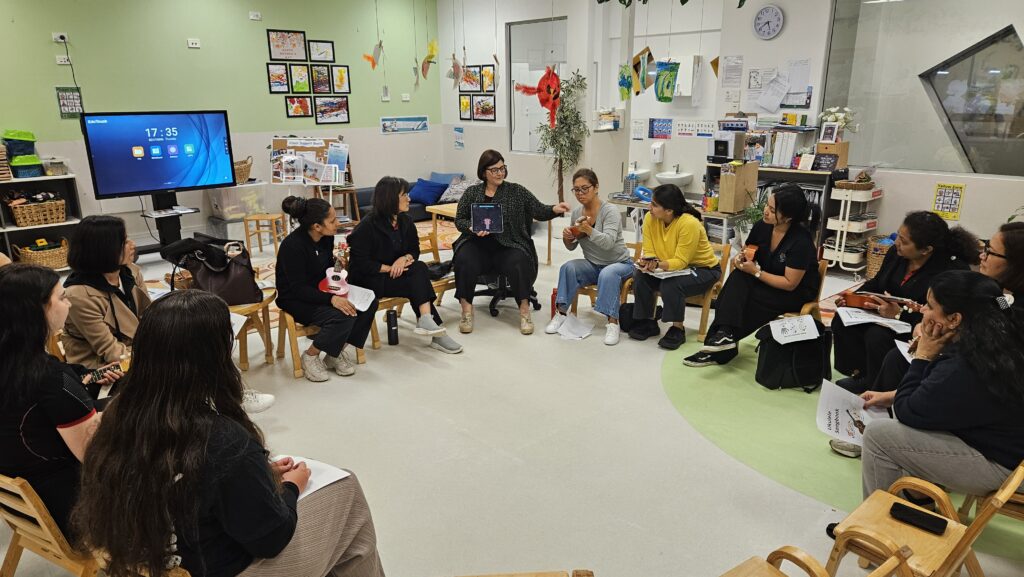
Recently, we partnered with My Cubby House Early Learning to deliver a centre-wide professional learning project focused on understanding sensory processing, supporting self-regulation and using rhythm and music-based strategies to guide children’s behaviour.
The results provide an encouraging example of what can happen when educator learning is supported through implementation, not just information.
The Challenge
Like many early learning services, My Cubby House was seeking practical ways to strengthen educator confidence in supporting children with regulation, sensory and behavioural needs.
The goal was not simply to introduce new strategies. It was to create a shared understanding across the team about:
- Behaviour as communication
- Regulation before learning
- Co-regulation as the pathway to self-regulation
- Sensory processing and its impact on participation
- Practical strategies that could be embedded into everyday routines
The project was funded through the Commonwealth Department of Education’s Inclusion Support Program and complemented by Queensland Government Kindy Uplift funding, creating an opportunity to invest in long-term educator capability.
Our Approach
The project combined multiple layers of support rather than relying on a standalone workshop.
Educators participated in:
- Five hours of professional development
- Forty-eight hours of room-based coaching
- Four and a half hours of facilitated mentoring and reflective practice
The focus was on helping educators apply regulation-informed strategies during real classroom experiences, including:
- Group time
- Transitions
- Waiting routines
- Pack-up routines
- Emotional and behavioural challenges
- Everyday interactions with children
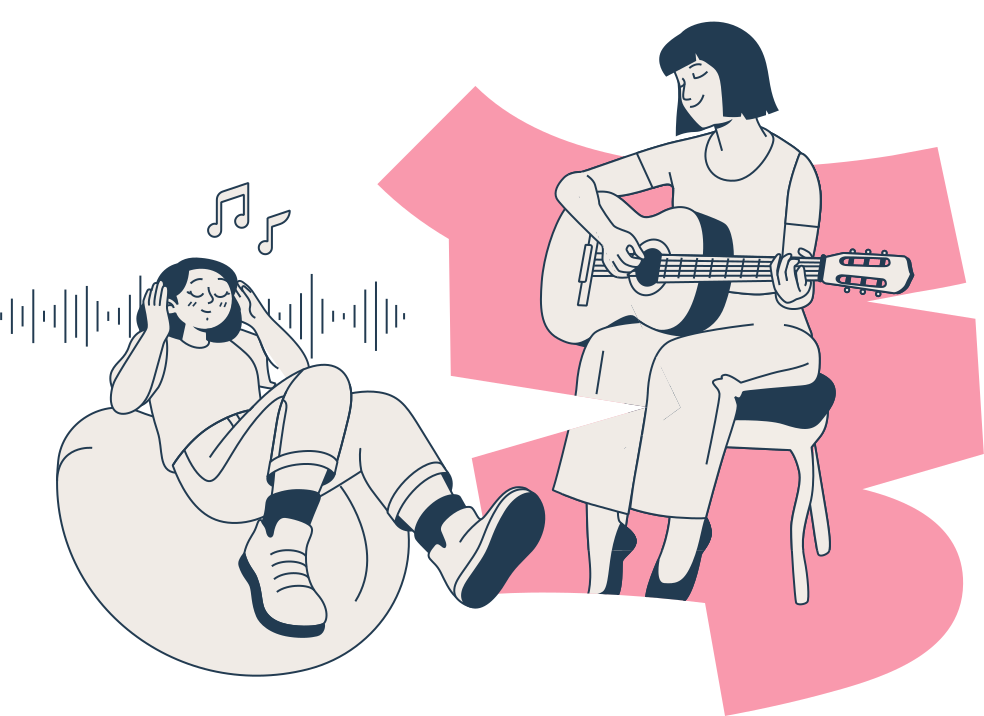
Importantly, music and rhythm were not presented as additional activities.
Instead, they were positioned as practical regulation tools that could be naturally embedded into existing routines and teaching practices.
What Changed?
The evaluation demonstrated improvements across every learning domain measured.
Across 24 matched survey questions, educators reported an average improvement of +0.44 points on a five-point confidence scale.
Perhaps most notably, the proportion of “Strongly Agree” responses increased from 31% before the program to 62.5% after the program, representing a substantial shift toward higher confidence across the educator group.
The strongest improvements were seen in:
Co-regulation
Educators reported greater confidence supporting children through co-regulation strategies and responding proactively rather than reactively.
Sensory Processing Knowledge
Staff developed stronger understanding of how sensory needs influence behaviour and participation, including greater awareness of movement, vestibular and proprioceptive systems.
Understanding Regulation
Educators strengthened their understanding of behaviour as communication and became more confident recognising and responding to dysregulation.
Practical Implementation
The team reported greater confidence applying strategies within everyday routines and contributing to a consistent centre-wide approach.
What Educators Told Us
While the quantitative data was encouraging, the educator feedback provided some of the most powerful insights.
One educator reflected:
“Music is a bridge for connection, communication and regulation.”
MCH Educator
Another shared:
“The training gave our team confidence in applying and using music as a tool to support children who are dysregulated.”
MCH Educator
Others described feeling more confident supporting children with sensory needs, using strategies during group time and understanding the importance of rhythm and movement in self-regulation.
Several educators commented that the training helped them view behaviour differently and gave them practical tools they could immediately apply in their rooms.
Why Coaching Matters
One of the strongest lessons from this project is that professional development alone is rarely enough to create lasting practice change.
Educators often leave workshops inspired and motivated, but implementation can be difficult without ongoing support.
The combination of professional learning, live coaching and reflective mentoring allowed educators to:
- Trial new approaches
- Reflect on what worked
- Adapt strategies for different children
- Develop confidence through practice
- Build consistency across teams
This is where sustainable change happens.
Building Educator Capability for the Future
As the complexity of children’s needs continues to grow, early learning services need more than isolated training sessions.
They need workforce development approaches that build educator confidence, strengthen inclusion and create practical, sustainable changes in everyday practice.
The My Cubby House project demonstrated that when educators are supported through learning, coaching and reflection, they can confidently embed regulation-informed strategies into the routines and relationships that shape children’s daily experiences.
The result is not simply more knowledgeable educators.
It is more confident teams, more consistent practice and stronger foundations for children’s participation, wellbeing and learning.
Interested in an Early Learning Partnership?
QPAH partners with kindergartens, long day care services and early childhood organisations across Queensland and Northern New South Wales to deliver tailored Early Learning Partnerships aligned with Kindy Uplift, inclusion and workforce capability priorities.
Our programs combine professional development, coaching, mentoring and outcome measurement to support meaningful and sustainable practice change.
Get in touch
If your service is looking to strengthen educator capability in regulation, communication, participation or inclusion, we’d love to start a conversation.
Because one-off professional development doesn’t change practice. Supported implementation does