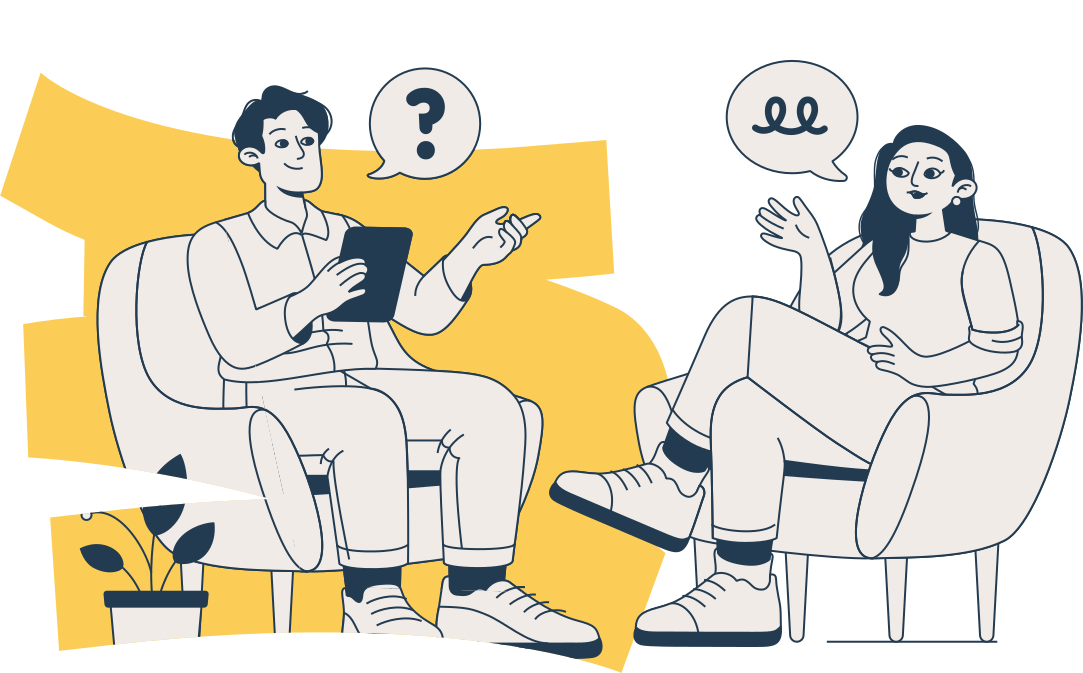
innovative approaches to education, engagement & participation
Schools & Flexible Education Partnerships
Supporting participation. Building capability. Helping students find their way to learning.
Queensland Premium Allied Health (QPAH) partners with schools and education services to create environments where more students can participate, communicate, regulate, connect and learn.
Our multidisciplinary team of Occupational Therapists, Speech Pathologists and Registered Music Therapists works alongside educators, support staff, students and families to provide practical allied health support within real education environments.
From mainstream primary and secondary schools to special schools, flexible learning programs and alternative education settings, our partnerships are tailored to the students you support, the challenges your team is experiencing and the priorities of your school or service.


impactfuL allied health
Allied Health That Works Where Learning Happens
At QPAH, we believe allied health can have its greatest impact when strategies move beyond the therapy room and become part of everyday environments.
Our clinicians work alongside teachers, teacher aides, wellbeing teams and school leaders to understand what may be getting in the way of a student’s participation and develop practical strategies that work within the realities of the school day.
That might mean supporting a teacher to understand a student’s sensory needs, helping a young person find a safer way to communicate, developing strategies for transitions, using music to build connection with a disengaged student, or helping a whole team create a more inclusive learning environment.
The goal isn’t simply to bring therapy into schools. It’s to build environments where students are better able to participate.
join us
Who We Partner With
Our education partnerships can be tailored for:
- Youth engagement and re-engagement programs
- Mainstream primary schools
- Mainstream secondary schools
- P–12 schools and colleges
- Special schools
- Special education programs
- Flexible Learning Options and flexible learning centres
- Alternative education services
- Specialist education settings
- Community-based education programs
- Distance education and outreach programs
- Education services supporting students experiencing school refusal or extended disengagement
Partnerships may involve individual students, small groups, classrooms, teaching teams or whole-school approaches.

WHY CHOOSE QPAH?
Our Multidisciplinary Approach
Music Therapy
Using music as a powerful pathway to regulation, connection, expression and engagement.
Delivered by Registered Music Therapists, Music Therapy can provide an alternative therapeutic pathway for students who may find traditional verbal, classroom or clinical approaches difficult to access.
Music Therapy may support:
- Emotional regulation
- Self-expression
- Identity and confidence
- Social connection
- Communication
- Executive functioning
- Group participation
- Relationship building
- Mental health and wellbeing
- Engagement with therapeutic support
- Re-engagement with learning and community
Music can be particularly valuable when working with young people who have become disconnected from school, peers or traditional support systems.
OUR multidisciplinary approach
Speech Pathology
Supporting students to understand, communicate, connect and participate.
Our Speech Pathologists can work alongside education teams to support:
- Receptive and expressive language
- Social communication
- Augmentative and Alternative Communication (AAC)
- Literacy-related language skills
- Communication partner strategies
- Classroom communication
- Following instructions and understanding curriculum language
- Self-advocacy
- Functional communication
- Mealtime and swallowing support where appropriate
We can also help educators create communication-accessible environments that support students with a wide range of communication needs.


innovative approaches to education
Occupational Therapy
Helping students participate more successfully in the everyday demands of education.
Our Occupational Therapists can support areas including:
- Sensory processing and regulation
- Emotional and self-regulation
- Classroom participation
- Attention and executive functioning
- Fine motor and handwriting skills
- Daily living and independence
- Environmental adaptations
- Transitions and routines
- Neurodiversity-affirming classroom practices
- Participation in playground, classroom and school activities
Rather than looking only at the student, our OTs consider the interaction between the student, task and environment to identify practical ways to make participation more achievable.
where we can provide support
Supporting Students Across the Education Continuum

Mainstrean Primary Schools
We work alongside primary school teams to support students whose communication, sensory, regulation, developmental or participation needs may be affecting their experience of school. Support may include individual or group intervention, classroom observation, educator consultation, professional development, transition support and practical strategies that can be embedded throughout the school day.

Secondary Schools
Adolescence brings increasingly complex academic, social, emotional and organisational demands. Our clinicians can support young people with communication, executive functioning, sensory regulation, self-advocacy, social participation, emotional wellbeing and engagement while working collaboratively with school wellbeing and learning support teams.
Special Schools & Specialist Education Settings
Our multidisciplinary team has extensive experience supporting children and young people with disability and complex communication, sensory, physical and developmental needs. We can work alongside specialist educators and support teams to complement existing expertise and provide targeted Occupational Therapy, Speech Pathology and Music Therapy input. Support may include AAC, communication partner training, sensory and regulation strategies, functional participation, independence, meaningful engagement, group programs and staff capability building.
Flexible & Alternative Education
Sometimes engagement comes before education.
Young people attending flexible or alternative education settings may have experienced disrupted schooling, mental health challenges, neurodivergence, disability, social isolation, trauma, difficult life experiences or extended periods of disengagement from education.
For these young people, expecting participation before establishing safety, trust and connection may simply create another barrier.
QPAH can work alongside flexible education teams to provide allied health approaches that meet young people where they are.
Our clinicians can support:
- Relationship and trust building
- Emotional regulation
- Communication and self-advocacy
- Identity and self-expression
- Sensory needs
- Mental health and psychosocial wellbeing
- Social connection
- Executive functioning
- Confidence and self-efficacy
- Engagement with therapeutic support
- Participation in education and community
- Gradual pathways towards re-engagement
Music Therapy can be particularly powerful in these settings because music can provide a non-threatening point of connection when direct conversation or traditional therapeutic approaches feel inaccessible.
Songwriting, beat-making, instrument playing, music production, lyric discussion and shared music experiences can create opportunities for connection and expression without requiring a young person to begin by sitting across from a clinician and talking.
a different approach to education
Flexible partnership models tailored to your school

Individual Allied Health Support
Occupational Therapy, Speech Pathology and Music Therapy can be delivered within the school environment, individually or collaboratively. Working where learning happens allows our clinicians to understand each student’s real-world needs, collaborate directly with educators and develop practical strategies that support communication, regulation, independence, engagement and participation throughout the school day.

Small Group Programs
Targeted small-group programs can be designed around the needs of your students and school community. Drawing on Occupational Therapy, Speech Pathology and Music Therapy, programs may support regulation, communication, social connection, executive functioning, wellbeing, self-advocacy, independence or engagement, with goals and activities tailored to your particular student cohort.
Classroom & Environmental Support
Sometimes meaningful change comes from adapting the environment rather than expecting the student to adapt. Our clinicians can observe classrooms, routines and activities, working alongside educators to identify barriers and develop practical adjustments to communication, sensory environments, task demands, transitions and participation that benefit individual students and the wider classroom.

Professional Development
We provide practical, evidence-informed professional development tailored to the needs of your school. Sessions can build staff confidence and capability in areas such as regulation, sensory processing, communication, AAC, neurodiversity-affirming practice, executive functioning, inclusive education and supporting disengaged young people, with strategies educators can apply immediately in everyday settings.

Coaching, Modelling & Mentoring
Professional learning is most powerful when educators are supported to translate knowledge into everyday practice. Our clinicians can work alongside teachers, support staff and wellbeing teams through coaching, live modelling, collaborative problem-solving and reflective mentoring, helping your team confidently embed allied health-informed strategies into classrooms, routines and relationships.

Whole-School & Long-Term Partnerships
For schools seeking sustainable change, QPAH can develop longer-term partnerships combining professional development, observation, consultation, modelling, coaching and targeted student support. Rather than providing isolated interventions, we work alongside your team to build capability, strengthen inclusive practice and embed approaches that continue benefiting students and educators long after our clinicians leave.
the qpah difference
One Team. Multiple Perspectives.
For Students
Our partnerships aim to help students feel understood, included and better equipped to participate in school life. Through support for communication, regulation, relationships, independence and engagement, we create opportunities for students to build confidence, experience success, strengthen their sense of belonging and participate more meaningfully in learning and their school community.
For Educators
We equip educators with practical strategies, greater confidence and a deeper understanding of the students they support. Through collaboration with our multidisciplinary team, teachers and support staff can better understand communication, regulation and participation needs, respond to complex presentations and confidently embed inclusive approaches into everyday classroom practice.
For Schools
Our partnerships help schools strengthen inclusive practice while building lasting capability within their teams. By bringing multidisciplinary allied health expertise into real education environments, we support more consistent approaches, collaborative problem-solving and sustainable strategies that benefit whole school communities, while providing flexible access to specialist support when and where it is needed.
from understanding to confidence
How Our Education Partnerships Work
We don’t believe in arriving with a predetermined program and expecting it to fit every school.

Listen
Listen
We learn about your school, your students, your team and the challenges you’re trying to solve.
Understand
Understand
Our clinicians identify the communication, sensory, environmental, regulation and participation factors that may be influencing the situation.
Collaborate
Collaborate
We develop a partnership model around your priorities, resources and education environment.
Implement
Implement
Our clinicians work alongside your team through therapy, groups, professional development, modelling, coaching or consultation.
Reflect
Reflect
We review what’s working, problem-solve barriers and adapt our approach together.
Embed
Embed
Our goal is sustainable change – building capability within your team so effective strategies become part of everyday practice.

A case study
Meeting Young People Where They Are
For some young people, the first meaningful outcome isn’t improved attendance, academic achievement or returning to a classroom.
It might be showing up.
Joining a music session.
Communicating something that matters to them.
Connecting with another person.
Trying something unfamiliar.
Experiencing success.
Feeling understood.
These moments can become the foundations from which participation grows.
Our article Beyond the Notes: Finding Their Rhythm explores how Music Therapy can support connection, expression and participation for young people who have become disengaged from education or traditional therapeutic supports.
Your search for unique education supports is here!
Every education community is different.
You may be looking for a Speech Pathologist to support communication across your classrooms, an Occupational Therapist to help your team better understand regulation and sensory needs, a Music Therapist to engage young people who aren’t connecting with traditional supports – or a multidisciplinary team to help tackle a bigger challenge.
You don’t need to know exactly what the solution should look like before contacting us.
Tell us about your students, your school and what you’re noticing.
We’ll build the partnership from there.

(07) 5647 6120