
Beyond the Notes: Making Space for Every Voice
How Group Music Therapy Can Support Communication, Connection, Sensory Regulation, Participation and Wellbeing in Special Education Settings
By Ellie Stephenson, Registered Music Therapist (RMT, NMT)
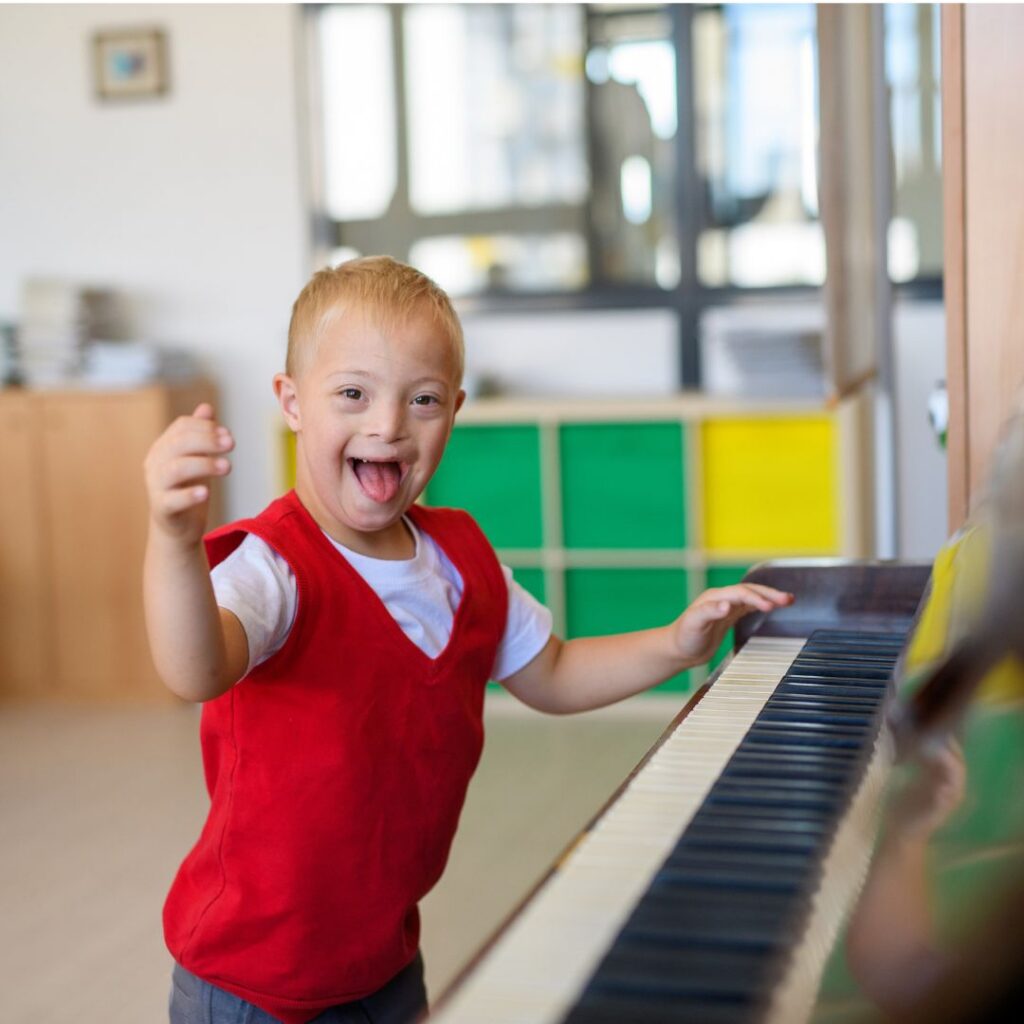
When you walk into a group music therapy session in a special education setting, you may see students singing, moving, playing instruments, vocalising, using AAC, listening, observing, creating or engaging with music in their own unique ways. At first glance, it may simply look like a music activity; however, beneath the music, a Registered Music Therapist is often supporting a range of therapeutic goals relating to communication, social connection, emotional wellbeing, sensory regulation, participation, self-expression and inclusion.
Most importantly perhaps, music is not the outcome; rather, music is the medium through which therapeutic work can happen.
Group Music Therapy in Special Education setting can create opportunities for students with diverse strengths, communication styles, sensory profiles, physical abilities and support needs to participate together in a shared experience. Within special education settings, this can provide an important context for practicing communication, building relationships, fostering a sense of belonging and supporting wellbeing.
Why Are Communication and Connection Important?
Schools are inherently social environments. In fact, throughout the day, students are expected to communicate needs, build relationships, navigate social situations, participate in learning activities, manage emotions and engage alongside peers and adults. For some students, these expectations can present significant challenges. Students may communicate in different ways, experience sensory processing differences, require physical support, have varying levels of cognitive/executive functioning or prefer different ways of interacting with others. While these differences are part of human diversity, a disability-affirming and neuro-affirming approach recognises that there is no single “correct” way to communicate, learn, regulate or participate.
Within group music therapy, goals may relate to:
- Social communication
- Shared attention
- Turn-taking
- Self-advocacy
- Emotional expression
- Relationship-building
- Participation in group experiences
- Sensory regulation
- Community belonging
- Confidence and engagement
- Wellbeing and quality of life.
With this is mind, it is pertinent to acknowledge that not every student will have the same goals.
Why Music?
Music is often described as a universal language. While people experience music differently across cultures, identities and communities, music can create opportunities for connection that do not rely solely on spoken language.
A student who communicates verbally, a student who uses AAC, a student who communicates through gesture/sign and a student who primarily communicates through movement can all participate in the same musical experience. Moreover, this flexibility can make music a particularly useful medium for inclusive group work.
Rather than requiring everyone to participate in the same way, music can provide multiple pathways into engagement. Students can contribute according to their own abilities, preferences and strengths, while remaining part of a shared group experience.
For many participants, music also brings enjoyment, familiarity, creativity and opportunities for self-expression. Moreover, these qualities can support engagement and create meaningful experiences of connection with others.
What Makes Group Music Therapy Unique?
Group Music Therapy sessions in Special Education settings are often incredibly diverse. In fact, within a single session, participants may have different communication styles, sensory needs, physical abilities, cognitive strengths, executive functioning skills, learning preferences and emotional regulation needs. A Registered Music Therapist does not simply select a musical activity and expect everyone to participate in the same way. Instead, the therapist carefully designs accessible musical experiences that allow multiple forms of participation.
A student might:
- Sing a greeting song
- Use a communication device to make musical choices
- Play an instrument independently or with support
- Contribute ideas to songwriting
- Communicate through movement
- Engage through listening and observation
- Respond through vocalisations, gestures or eye gaze
- Take leadership within a group activity.
Each of these responses may represent meaningful participation. Therefore, the aim is not uniformity; it is meaningful access.
Accessibility as a Therapeutic Principle
A neuro-affirming and disability-affirming approach recognises that participation does not need to look the same for everyone. Historically, some interventions focused primarily on helping individuals adapt to existing environments. Contemporary disability-affirming practice increasingly recognises the importance of adapting environments, so that more people can participate successfully.
Within music therapy, accessibility is not an afterthought. Rather, it is a central part of clinical reasoning and at the heart of who we are here at QPAH.
A Registered Music Therapist may adapt:
- Instruments
- Visual supports
- Physical positioning
- Movement demands
- Communication methods
- Musical complexity
- Session structure
- Group size
- Turn-taking expectations
- Sensory input.
Students may participate through speech, AAC, gesture, movement, assisted access, switch-adapted instruments, eye gaze, singing, drumming, listening or many other forms of engagement.
The therapeutic question is often not: “How do we get everyone to participate in the same way?”
Instead, it is: “How do we create meaningful opportunities for each person to participate?”
Understanding Sensory Regulation in Group Settings
Group environments can be rewarding; however, they can also be demanding. Students may be processing sound, movement, visual information, social interactions, transitions, communication demands and classroom expectations all at the same time. For some learners, these demands can contribute to sensory overload, fatigue, dysregulation or reduced capacity to engage.
A neuro-affirming approach recognises that sensory regulation is not simply a prerequisite for participation. In fact, participation itself can be supported through thoughtful regulation strategies. Music provides a flexible framework through which therapists can intentionally adjust sensory experiences.
Elements such as the below can all be adapted according to the needs of individual participants and the group as a whole.:
- Rhythm
- Tempo
- Predictability
- Repetition
- Volume
- Instrumentation
- Movement
- Structure
- Musical complexity.
For example, a therapist may:
- Use predictable musical routines to support safety and anticipation
- Alternate between highly active and calming experiences
- Reduce sensory demands when students appear overwhelmed
- Incorporate movement opportunities for students who regulate through physical activity
- Introduce pauses, breaks or low-demand participation options
- Use musical synchrony and shared rhythm to support co-regulation.
The goal is not to keep students permanently calm or regulated. Rather, music therapy may provide opportunities to explore and navigate regulation needs within a supportive and responsive environment.
What’s Happening Therapeutically?
A Registered Music Therapist is not simply facilitating musical activities. Each intervention is selected with therapeutic intent.
| Musical Activity | Therapeutic Process | Possible Goal |
| Singing together | Shared attention and participation | Social connection and group belonging |
| Instrument turn-taking | Listening, waiting and responding | Social communication and reciprocity |
| Musical choices | Expressing preferences and decision-making | Self-advocacy and autonomy |
| Movement to music | Engaging body awareness and regulation | Participation and sensory regulation |
| Collaborative songwriting | Sharing ideas and negotiating with others | Communication and relationship-building |
| Group improvisation | Responding to others in real time | Flexibility, interaction and engagement |
The musical activity itself is rarely the endpoint. Instead, the therapist is intentionally using music to create opportunities for communication, participation, self-expression, regulation and connection.
Social Communication Beyond Words
Communication is about much more than speech. Within music therapy, communication may occur through:
- Singing
- Vocalisations
- Rhythm
- Gesture
- Eye gaze
- Body movement
- Instrument choices
- Timing
- Shared attention
- AAC systems.
A disability-affirming approach recognises all these forms of communication as meaningful. Rather than focusing solely on teaching a student to communicate in a particular way, music therapy may create opportunities for students to experience being heard, acknowledged and responded to using their existing communication strengths. This can be particularly valuable within group settings, where students have opportunities to communicate – not only with adults, but also with peers.
A Strengths-Based and Neuro-affirming Approach
Music therapy in special education settings is often grounded in a strengths-based philosophy. The focus is not solely on areas of difficulty. Instead, the Registered Music Therapist seeks to understand what motivates each student, how they engage, how they communicate, what brings enjoyment and what supports meaningful participation.
A student’s strengths may include:
- Musical interests
- Creativity
- Persistence
- Sense of humour
- Attention to detail
- Love of movement
- Rhythmic abilities
- Strong memory for songs
- Unique communication styles
- Leadership within preferred activities.
These strengths become therapeutic resources. Importantly, a strengths-based approach does not mean avoiding challenge. Rather, the therapist carefully balances support and challenge, creating opportunities for students to try new experiences, develop confidence, build relationships, explore self-expression and expand participation within safe and supportive boundaries.
The goal is not to change who a student is. Instead, the goal is to support meaningful participation, connection, wellbeing and access, while respecting each person’s individuality.
The Role of Joy and Wellbeing
Discussions about disability can sometimes focus heavily on difficulties, goals and support needs. While these areas are important, wellbeing also matters. Experiences of joy, belonging, creativity, connection and meaningful participation are valuable in their own right.
Music often provides opportunities for shared enjoyment and collective experiences. Students may contribute to a group, express preferences, connect with peers, experience success and participate in activities that feel meaningful to them.
An Illustrative Practice Example
The following example is illustrative and does not describe an individual QPAH client.
Imagine a classroom group where students have varying communication styles, sensory profiles, physical abilities and levels of cognitive functioning. During a music therapy session, some students sing, some use AAC to make choices, some play instruments, some move to the music and others participate through listening, observation or gesture.
The Registered Music Therapist structures the session with predictable routines and accessible materials, while also providing opportunities for choice-making, interaction, creativity and shared experiences.
Although students participate differently, each is supported to contribute in ways that are meaningful to them. The therapeutic goal is not for every student to engage identically. Rather, music provides a shared space where communication, participation, regulation, self-expression and connection can be explored according to each student’s individual strengths, goals and support needs.
What Does the Evidence Tell Us?
Music therapy has been investigated in educational and disability-support contexts in relation to communication, social interaction, engagement, participation, emotional expression and wellbeing. Research suggests that music therapy may provide opportunities to support social communication and interaction goals for some children and young people – particularly when interventions are individualised and delivered within a therapeutic relationship. Similarly, research has also explored the role of music therapy in supporting participation, relationship-building and engagement for children with diverse developmental and support needs.
However, findings are not always consistent across studies and populations. Consequently, researchers continue to call for high-quality research examining which approaches are most appropriate for particular goals and individuals.
As with all allied health interventions, outcomes vary. Music therapy is not a replacement for education, speech pathology, occupational therapy, psychology, physiotherapy, medical care or other appropriate supports. It is most often delivered as part of a broader multi-disciplinary approach that supports participation, learning, communication and wellbeing.
What This Means in Practice
Group music therapy in special education settings is about far more than making music together. It may provide opportunities to work towards goals relating to:
- Communication
- Social interaction
- Peer relationships
- Participation
- Self-expression
- Sensory regulation
- Emotional wellbeing
- Self-advocacy
- Inclusion and belonging
- Confidence and engagement.
Using a neuro-affirming, disability-affirming and strengths-based approach, Registered Music Therapists create accessible opportunities for students to participate, connect and contribute within a shared community experience.
Learn More About Music Therapy at QPAH
Queensland Premium Allied Health (QPAH) provides music therapy services delivered by Registered Music Therapists across educational, community, aged care, professional development and clinical settings.
If you would like to learn more about music therapy or discuss whether it may be appropriate within a student’s educational and therapeutic supports, QPAH can provide information about available services and referral pathways.
Evidence & Further Reading
Gattino, G. S., Riesgo, R. D. S., Longo, D., Leite, J. C. L., & Faccini, L. S. (2011). Effects of relational music therapy on communication of children with autism: A randomized controlled study. Nordic Journal of Music Therapy, 20(2), 142–154. https://doi.org/10.1080/08098131.2011.566933
Geretsegger, M., Fusar-Poli, L., Elefant, C., Mössler, K. A., Vitale, G., & Gold, C. (2022). Music therapy for autistic people. Cochrane Database of Systematic Reviews, 2022(5), Article CD004381. https://doi.org/10.1002/14651858.CD004381.pub4
Kern, P., Rivera, N. R., Chandler, A., & Humpal, M. (2013). Music therapy services for individuals with autism spectrum disorder: A survey of clinical practices and training needs. Journal of Music Therapy, 50(4), 274–303. https://doi.org/10.1093/jmt/50.4.274