
Celebrating Excellence in Music Therapy: Milestones, Professional Growth and Lifelong Learning
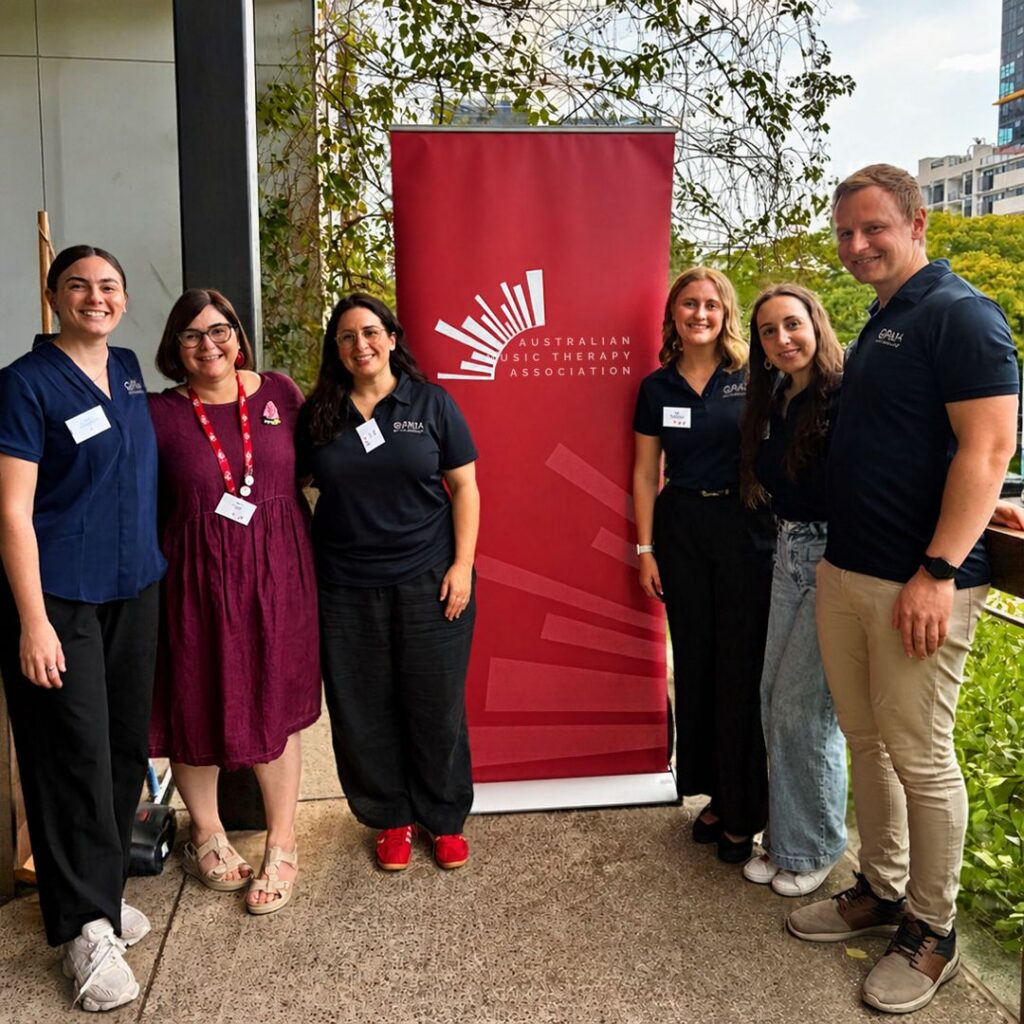
Our Music Therapy team recently celebrated several professional milestones at the 2026 Australian Music Therapy Association (AMTA) Symposium: Music Therapy in Motion. This annual event provided an opportunity for the team to reconnect with colleagues from across Australia and invest in ongoing learning. Moreover, it served as a reminder of the depth of expertise and commitment to professional development that underpin the work of Registered Music Therapists.
Coming Together at the Music Therapy Symposium
We were delighted to have our entire Music Therapy team attend the Symposium. Held at the iconic Queensland Museum Kurilpa, the event brought together Registered Music Therapists from around the country. This close-knit community shared research, clinical innovations, emerging practice trends and new approaches to supporting clients through evidence-based music therapy.
One of the highlights for our team was the opportunity to reunite, in person, with our Registered Music Therapist, Jorja. Usually based in Townsville, Jorja was ecstatic to join Gold Coast and Tweed Heads-based colleagues in Brisbane for the event.
The Symposium provided an opportunity for the team to strengthen collaboration, engage in reflective practice and remain at the forefront of contemporary clinical knowledge. For our clients, this translates to accessing services informed by current, evidence-based research and best-practice approaches.
Celebrating a 25-Year Milestone
The Symposium was also the setting for a remarkable professional achievement.
Our Director and Principal Registered Music Therapist, Monica Zidar, was honoured with her 25-year Registered Music Therapist pin. This recognised a quarter-century of dedication to the music therapy profession.
While reaching 25 years as a Registered Music Therapist was a significant achievement within itself, what made this recognition especially meaningful was the story behind it. The award was presented by Dr Jeanette Kennelly, with Professor Jane Edwards in attendance. Both women are highly respected leaders in the Australian music therapy profession and have played a pivotal role in Monica’s early career.
Twenty-five years ago, Jeanette and Jane were Monica’s registration examiners, assessing her clinical competency as she completed the final stage of becoming a Registered Music Therapist. Standing alongside them again a quarter of a century later created a powerful, full-circle moment. This reflected Monica’s professional journey, alongside the enduring mentorship, leadership and connection that characterise the music therapy community.
The significance of the occasion stretches back even further. As a teenager, Monica attended a presentation where Jane spoke about the emerging profession of music therapy in Australia. Hearing about combining music with therapeutic practice sparked an interest that would ultimately shape the course of her career – and her life. What began as an inspiring introduction to a relatively new profession grew into a lifelong commitment to supporting people through music.
Over the past 25 years, Monica has worked across a broad range of clinical settings. She has supported children, young people, adults and older adults through evidence-based music therapy. Alongside her clinical work, she has supervised students, mentored early career therapists, contributed to professional education, presented at conferences and supported research initiatives. She has also long advocated for the profession, at both national and international levels.
Today, Monica serves as President of AMTA, helping lead the profession she first discovered as a young, aspiring therapist.
Recognising the Next Generation of Registered Music Therapists
The symposium was not only an opportunity to celebrate a distinguished 25-year career. It was also an opportunity to recognise the next generation of music therapy professionals.
In another fitting full-circle moment, during the same ceremony in which Monica received her 25-year pin, she also had the privilege of presenting registration pins to newly registered music therapists entering the profession.
Among them was our own Registered Music Therapist, Ellie, who received her very first pin from AMTA. This important milestone marked the successful completion of years of tertiary education, clinical placements, supervision and professional competency requirements.
Having her pin presented by Monica made the occasion particularly special. In many ways, it reflected the profession’s ongoing cycle of learning, mentorship and leadership. Experienced practitioners supported Monica at the beginning of her career. Now, she is helping to guide and celebrate those embarking on their own professional journeys.
The image of an experienced clinician celebrating 25 years of practice, while recognising newly registered therapists, beautifully captures the profession’s commitment to mentorship and future growth.
These milestones served as a powerful reminder that professional achievements are about more than years of service or qualifications attained. They reflect the lasting impact of mentorship and the importance of lifelong learning. They demonstrate a shared commitment to improving lives through evidence-based music therapy. For Monica, it was an opportunity to reflect on the people who helped shape her journey. Similarly, for Ellie, it marked the beginning of an exciting new chapter. For the profession as a whole, it was a celebration of both its rich history and its bright future.
Music Therapy: An Evidence-Based Allied Health Profession
Many people are familiar with the positive effects of music. However, fewer understand that music therapy is a regulated, evidence-based allied health profession.
Registered Music Therapists complete specialised university training. Generally, this means attaining a Masters qualification combining music, neuroscience, health sciences, counselling, human development and clinical practice. Additionally, beyond graduation, therapists undertake supervised clinical work and must maintain ongoing professional development requirements throughout their careers.
Importantly, Registered Music Therapists differ from other music professionals such as music teachers, performers and community music facilitators.
For example, music teachers focus on developing musical skills such as instrumental technique, music reading and performance. Whereas Registered Music Therapists use music intentionally and therapeutically to support non-musical goals. These goals may include:
- Communication and language development
- Social interaction and relationship building
- Emotional regulation and wellbeing
- Cognitive functioning and memory
- Motor skills and movement
- Mental health support
- Community participation
- Quality of life and personal wellbeing.
Music therapy interventions are tailored to individual needs, assessed clinically and informed by a growing body of international research.
This distinction is important, because effective music therapy is not simply about playing music. Chiefly, it involves clinical assessment, therapeutic planning, ongoing evaluation and evidence-based intervention delivered by a qualified allied health professional.
Why Professional Development Matters
One of the strongest themes throughout the Symposium was the importance of ongoing learning.
Healthcare knowledge continually evolves. Allied health professionals have a responsibility to stay informed about emerging evidence, new treatment approaches and advances in clinical practice. Events such as this provide opportunities for practitioners to learn directly from researchers, experienced clinicians, educators and industry leaders.
For our Music Therapy team, attending professional events is not simply about maintaining registration requirements. Instead, this reflects a genuine commitment to excellence and providing the highest standard of care for the children, young people, adults and families we support.
Looking Ahead
As we reflect on the achievements celebrated at the AMTA 2026 Symposium, we are incredibly proud of our Music Therapy team.
From Monica’s 25 years of contribution to the profession, to Ellie’s registration milestone, to the collective learning and connection experienced by our entire team, these moments highlighted the professionalism, expertise and passion that drive music therapy forward.
We congratulate Monica, Ellie and all Registered Music Therapists who were recognised throughout the symposium. We look forward to continuing to bring evidence-based, person-centred music therapy services to our community.
When clinical expertise and the power of music come together, meaningful outcomes become possible every day.